Reading the Roar: A Buyer's Framework for Transport Noise in 2026
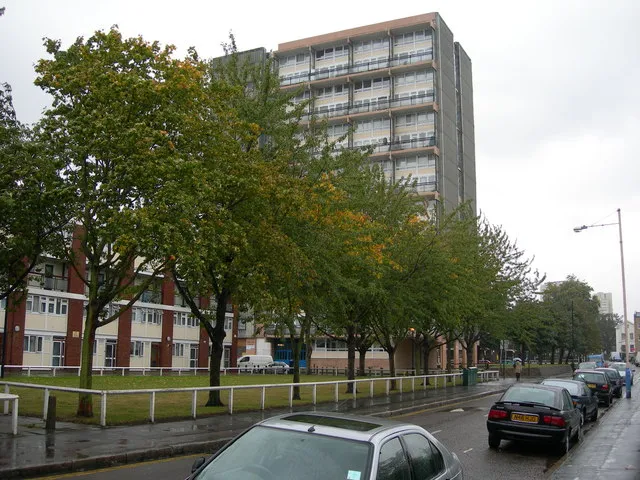
Photo: Danny Robinson, CC BY-SA 2.0, via Wikimedia Commons
Transport noise is rarely a simple yes-or-no issue. A house near a railway line may be quiet for most of the day, then subject to freight movements at night. A road that seems manageable outside rush hour can produce a different impression once school traffic, delivery vans and evening queuing are added. Aircraft routes may affect only certain parts of a neighbourhood, and only at particular times. For buyers in 2026, the task is not to find a property with no transport noise at all, but to understand what kind of noise it is, when it occurs and what it would take to live with it.
A useful approach is to treat the purchase as a three-pronged check: visit at the right times, examine the documentary evidence, and price the mitigation. Each prong tests a different assumption. Together they provide a more realistic picture than a single viewing or a seller's reassurance.
Start with the timetable, not the viewing slot
Most property viewings take place when the vendor wants them to. That may be a quiet Saturday morning or a weekday afternoon when the road is comparatively clear. It is not necessarily when the property is at its loudest. Buyers concerned about rail, road or flight paths should arrange at least one visit during a peak period and one during an off-peak period. For road noise, that means a weekday between roughly 7.30am and 9.30am, and again between 4pm and 7pm. For rail noise, it is worth checking the frequency and type of services, including freight, and visiting when windows are open rather than relying on a sealed viewing.
Flight paths require a different discipline. Aircraft noise is intermittent, so a single visit may miss it entirely. Buyers should check the relevant airport's published flight-path maps and noise contour information, then visit at different times of day. Some airports publish web tools showing current arrivals and departures. It is also sensible to stand in the garden or outside the front door, not only in the living room, because outdoor amenity space is part of what is being bought.
Time-of-day visits also reveal how the property itself behaves. Single glazing, trickle vents, chimney breasts and suspended floors can all affect how sound enters. A room that seems acceptable with the windows closed may be less so in summer. Buyers should test the noisiest room at the noisiest time, not the quietest corner of the house.
Read the paper trail before relying on impressions
The second prong is documentary. Planning records are often more revealing than an estate agent's particulars. Local authority planning portals can show nearby applications for roads, rail infrastructure, industrial uses, airport expansion or changes of use that may increase noise in future. They can also reveal conditions attached to previous permissions, such as restrictions on operating hours or requirements for acoustic bunds.
Acoustic reports are common in new-build and conversion schemes, particularly where the property is near a railway or major road. A report should identify the noise sources assessed, the measurement locations, the time periods covered and the internal noise levels predicted with windows open and closed. Buyers do not need to become acousticians, but they should look for the assumptions. A report based on daytime measurements may say little about night-time freight. A report that predicts acceptable levels with windows closed may still leave a question mark over summer ventilation.
For homes near airports, the seller may hold information from searches or from a previous acoustic assessment. It is worth asking whether the property falls within a published noise contour and whether any grant or mitigation scheme has been used. Sellers and agents are generally required to answer questions truthfully, but they are not obliged to volunteer every adverse detail. The principle is caveat emptor: the buyer must make reasonable enquiries. Written questions are therefore more useful than verbal assurances, because they create a record.
What sellers and agents may, and may not, disclose
A seller must not misrepresent a material fact. If asked directly whether the property suffers from aircraft noise or rail vibrations, a false answer could give rise to a claim. However, a seller is not usually under a duty to disclose every source of noise that a buyer could discover by visiting or searching public records. Estate agent particulars are marketing documents, not technical surveys. Phrases such as 'quiet location' or 'peaceful setting' should be treated as impressions rather than guarantees.
Buyers should therefore ask specific questions in writing: which transport routes affect the property; whether the seller has commissioned an acoustic report; whether any complaints have been made about noise; and whether any mitigation works have been carried out. The answers may be incomplete, but the questions establish what was known and when.
Price the mitigation, not just the problem
The third prong is cost. Noise can often be reduced, but rarely eliminated. Secondary glazing, acoustic double glazing, upgraded seals, loft insulation, acoustic fencing and mechanical ventilation can all help. Their effectiveness depends on the source and the building. Secondary glazing may reduce road noise at the front of a house while doing little for low-frequency rail vibration. A garden fence may soften road noise at ground level but not aircraft noise overhead.
Buyers should obtain indicative quotes before exchange, not after completion. Acoustic glazing for a typical bay-fronted living room can run into several thousand pounds. Whole-house ventilation may be needed if windows must stay closed in summer. These figures should be weighed against the asking price. A property that is £20,000 cheaper than a comparable quiet street may still be poor value if £15,000 of mitigation is required and the residual noise remains noticeable.
Valuation, lending and everyday enjoyment
Noise exposure can affect valuation, although the effect is rarely uniform. A busy road may be priced in by the local market, while a new flight path or rail timetable change may not yet be reflected. Lenders are generally concerned with marketability and structural condition rather than noise alone, but a surveyor may comment on it if the property is close to a major source. Buyers using a mortgage should check whether any specialist valuation or environmental search is required.
The more important test is everyday enjoyment. Noise that is tolerable for a week may become fatiguing over months. Sleep disruption, difficulty working from home and the inability to open windows comfortably are practical issues, not merely aesthetic ones. Buyers should imagine the property in January and in July, on a weekday and at a weekend.
Negotiation points and a realistic conclusion
Where noise is documented and mitigation is possible, there is usually scope for negotiation. The buyer can point to the cost of acoustic glazing, the need for ventilation or the impact on the garden. A seller may reduce the price, contribute to works or accept a later completion date to allow quotes to be obtained. In new-build cases, the developer may already have a specification; buyers should check whether upgraded glazing is included or optional.
Noise is a manageable feature rather than a deal-breaker when it is predictable, documented and capable of being reduced to a level the buyer finds acceptable. It becomes a genuine problem when it is intermittent, undisclosed, likely to increase, or expensive to mitigate. The three-pronged check will not make a noisy home quiet, but it will help a buyer decide whether the noise is a fair price to pay for the rest of the property.