The Route Is Not the Right: Easement and Access Checks Before Exchange in 2026
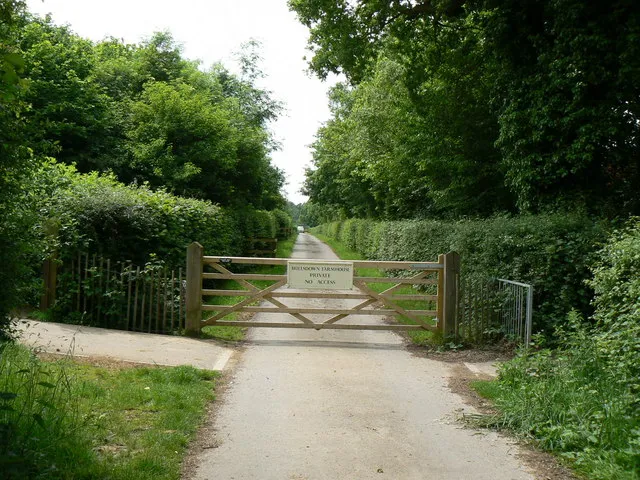
Photo: Sebastian Ballard, CC BY-SA 2.0, via Wikimedia Commons
Access is one of the most visible features of a property and one of the easiest to misread. A shared drive, a rear lane or a track across a field may appear to belong to the house being sold, or to be safely available, simply because it has been used for years. In conveyancing terms, however, the physical route is not the legal right. Before exchange in 2026, a buyer should establish what right exists, who enjoys it, who pays for it and whether it can be obstructed or lost.
This is not a niche concern. It arises with rural cottages, backland plots, converted buildings, terraced houses with rear access, mixed-use premises and properties where parking or bin storage depends on a strip of land owned by someone else. The practical question is straightforward: can the property be used as intended, today and on resale, without relying on a neighbour's goodwill?
Start with the title plan, but do not stop there
The title plan is a useful starting point, not a complete answer. It shows general boundaries and may colour or hatch areas to indicate rights, but it does not prove the precise extent of an easement. The register of title may refer to a right of way, a grant or a reservation, while older unregistered deeds may contain the detailed wording. Ask the solicitor to assemble the registered title, the plan, any transfer or conveyance, and relevant correspondence.
Look for the difference between a public highway and a private road. A local authority search can help with adoption and maintenance of highways, but it will not resolve private access rights over unadopted land. Similarly, a route shown on a plan may be included within the title, owned by a third party, or subject to a right that benefits only part of the property. Those distinctions matter before exchange.
The wording that carries the right
An express easement should identify the route, the purpose and the type of user. A right to pass on foot is not the same as a right to drive vehicles. A right for domestic use may not support business deliveries. A right granted to the original owner may not transfer automatically to every later buyer unless it is properly attached to the land. Check whether the right is granted or merely reserved, and whether it is registered against the land over which it is exercised.
Long use can sometimes support a prescriptive right, but this is rarely a safe assumption for a buyer. Use alone does not create a guaranteed legal right, and a neighbour may dispute the extent or existence of the claimed route. Implied rights can arise in some sale situations, but they are fact-specific. These are points for legal advice, not for inference from a site visit.
Maintenance, repair and proportionate cost
Access rights often bring obligations. A shared private road may be maintained by a company, a residents' association or an informal arrangement between neighbours. Ask who owns the surface, who repairs it, how costs are apportioned and whether there is a formal mechanism for collecting contributions. Check for covenants, estate rentcharges or service charges that fund access maintenance.
Where maintenance is vague, the risk is not only cost but dispute. A buyer should understand whether the route is adoptable, whether drainage and boundaries are included, and who is responsible for gates, barriers and signage. For commercial premises, also consider loading hours, customer parking, delivery access and liability on shared areas. For residential property, consider refuse collection, emergency access, removals and everyday deliveries.
Landlocked and awkward access
Landlocked land has no lawful access to the public highway. It can arise where land has been sold off, where a backland plot has been created, or where access depends on an undocumented arrangement over a neighbour's land. Warning signs include an access route that is not mentioned in the title, a gate controlled by a third party, or a seller who relies on informal permission rather than a deed.
Awkward access is a separate issue. A legal right may exist, but the route may be narrow, steep, unmade, subject to a low bridge or shared with other users. Consider whether a removal van, emergency vehicle or waste lorry can reach the property. For a business, test whether customers and suppliers can arrive without obstructing neighbours. For a home, consider prams, bicycles and bulky deliveries. Suitability is part of the assessment even where the legal right is sound.
Services, drains and the right to maintain
Access is not only about people and vehicles. Pipes, cables, drains and sewers may cross neighbouring land. Check that there are adequate easements for services and for entry to inspect, repair or renew them. If a drain serving the property runs under a neighbour's garden, there should be a clear right to maintain it. Without that right, routine repairs can become expensive and contentious.
Ask for drainage and service plans where available. Statutory rights may assist in some utility contexts, but they do not cover every private arrangement. Shared systems need particular attention: who maintains them, how costs are shared and what happens if a repair is needed urgently.
Questions for the solicitor
- Does the title include an express right of way over the full route from the public highway to the property?
- Is the right on foot only, or does it include vehicles? Are there width, height or weight limits?
- Is the route owned by a third party, and is the right registered?
- Who maintains the route, and how are costs shared?
- Are there covenants restricting parking, hours of use or types of vehicle?
- Are there any known disputes, notices or complaints about access?
- For landlocked or rear access, is there a permanent easement or only a temporary permission?
- Do service easements cover all pipes, cables and drains serving the property?
Questions for the seller
- How long have you used the access, and under what arrangement?
- Has anyone ever blocked, restricted or challenged the route?
- Who repairs the surface, gates and boundaries?
- Are there informal agreements with neighbours that are not in the title?
- Has the route ever flooded, subsided or been closed?
- For a business, are there restrictions on deliveries or opening hours?
Inspection points
Walk the route from the public highway to the property. Note gates, barriers, locks, shared surfaces and signage. Photograph the condition and any obstructions. Check whether the route is shared with other properties and whether it is wide enough for the intended use. In terraced areas, check rear access lanes and bin routes. In rural areas, check tracks, bridges and fords, and ask about seasonal problems. For flats, check common access and fire routes. The inspection should test the legal information, not replace it.
Before exchange
Access risk is largely an evidence risk. A buyer should know the legal route, the physical route and the maintenance route. If the right is unclear, take advice before exchange; remedies after completion can be slow and costly. An indemnity policy may help in limited circumstances, but it is not a substitute for a missing right. The practical test is whether the property can be used as intended and sold on without avoidable friction. In 2026, with lenders and insurers asking more detailed questions, a clear access file is part of a marketable title.