The Supply Behind the Socket: Assessing Incoming Power Before a UK Purchase
A property viewing tends to focus on the visible: the condition of the kitchen, the lie of the roof, the presence of damp at the skirting. The incoming electricity supply rarely enters the conversation. Yet the capacity of that supply can determine whether a buyer can install a heat pump, charge an electric vehicle at a useful speed, or add a loft conversion without triggering a network upgrade. In 2026, as electrification moves from aspiration to ordinary household planning, that invisible piece of infrastructure deserves a place on the pre-exchange checklist.
Why incoming capacity is not the same as a modern fuse board
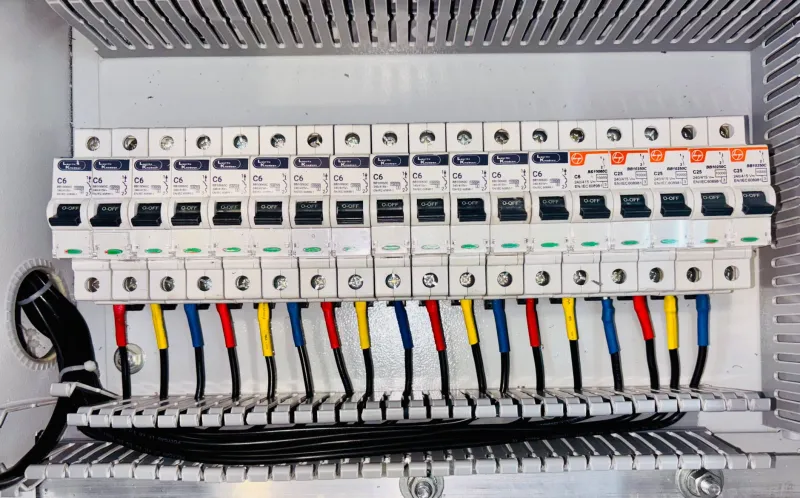
A common misunderstanding is that a newly installed consumer unit, often described as a fuse board, guarantees sufficient power. It does not. The consumer unit distributes electricity around the home, but the volume available is set upstream by the distribution network operator, or DNO. The DNO owns the service cable and the cut-out fuse, usually located in a meter cupboard or under the stairs. That cut-out fuse carries a rating, commonly 60A, 80A or 100A in domestic properties. It caps the total load the property can draw.
A modern consumer unit may improve safety and accommodate more circuits, but it cannot enlarge the cut-out rating. Nor can an electrician simply replace the cut-out fuse with a larger one; that is a matter for the DNO and depends on the capacity of the cable and the wider network. Buyers should therefore treat the cut-out rating as a material property attribute, in the same way they would treat the age of the boiler or the condition of the wiring.
Reading the evidence during a viewing
The first practical step is to locate the meter and cut-out. In flats, these may sit in a communal cupboard or outside the property. In terraced housing, particularly older stock, the arrangement can be more revealing. A looped supply is one such feature: the service cable runs from the street to one property and then loops to a neighbour, with the two supplies sharing a single cable head. Looped supplies are not uncommon in pre-war terraces and can complicate an upgrade, because unlooping may require the DNO to install a separate service cable.
Warning signs include two cables leaving the cut-out or meter area, a shared cupboard containing neighbours' meters, or a service head that appears to serve more than one property. These are not defects in themselves, and many homes with looped supplies function perfectly well for ordinary domestic demand. The issue arises when a buyer intends to add significant load. A photograph of the cut-out, meter and any visible labelling is useful evidence to take away. The MPAN, the supply number usually printed on the meter or an energy bill, allows the DNO to identify the connection precisely.
Buyers should not rely solely on an estate agent's answer. Sellers may not know the cut-out rating, and the DNO's records are the authoritative source. A capacity enquiry can be made by the buyer or, more commonly, by the seller or their electrician. Some DNOs provide a simple postcode and address check; others require a formal connection application before confirming available capacity. That distinction matters, because an enquiry may give an indicative answer while an application produces a binding offer.
Single-phase, three-phase and the limits of each
Most UK homes are supplied on a single-phase connection at around 230 volts. Three-phase supplies are more common in commercial premises and larger houses, and they allow higher loads and faster vehicle charging. A three-phase cut-out typically has three fuses or a distinct label. If a buyer's plans depend on 22kW charging or a substantial heat pump installation, the presence or absence of three-phase power is worth establishing early.
Upgrading from single-phase to three-phase is not a routine electrical job. It may require a new service cable from the street, a new cut-out and meter, and in some cases reinforcement of the local network. Costs can run into several thousand pounds, and timescales are governed by the DNO, not the buyer's conveyancer. Unlooping a shared supply is usually less extensive but still involves the DNO and can take weeks. In constrained network areas, the wait may be longer.
What common projects actually demand
A typical 7kW home EV charger draws around 32A. A heat pump might require anything from 5kW to 12kW or more, depending on the property's fabric and the chosen system. An electric shower can draw 8.5kW to 10.5kW, and an induction hob around 7kW. Individually these loads may be manageable under a 100A supply, but combined with existing cooking, heating and lighting, the maximum demand calculation can become tight. Diversity, the engineering principle that not all appliances run at once, helps, but it is not a licence to ignore the arithmetic.
Loft conversions and garden rooms add circuits and sometimes electric heating. Solar panels and battery storage raise separate questions about inverter capacity and DNO notification. The common thread is that the installer should provide a maximum demand calculation before the buyer commits to a design. A charger installer who simply quotes for a unit without assessing the existing supply is offering an incomplete service.
A pre-exchange checklist
First, obtain the MPAN and ask the seller for any recent Electrical Installation Condition Report, together with correspondence with the DNO. Second, photograph the cut-out fuse rating and meter arrangement. Third, submit a capacity enquiry to the relevant DNO. Fourth, ask the intended installer for a written maximum demand calculation. Fifth, obtain quotes for any upgrade, including DNO fees, electrician costs, meter relocation and reinstatement. Sixth, check the earthing arrangement and bonding, since these affect what can safely be installed. Seventh, establish whether the supply is looped and, if so, what unlooping would involve. Finally, build the time required into the purchase timetable.
Budgeting and negotiation
Upgrade costs are not limited to the DNO. Older properties may need a new consumer unit, improved earthing or additional circuits. In urban locations, trenching or traffic management can add expense. Buyers should treat these figures as part of the property's true cost, not as an afterthought. Where the works are necessary to the buyer's intended use, a price adjustment or a condition requiring the seller to complete the upgrade may be appropriate. In auction purchases, where there is no opportunity to renegotiate after exchange, the risk is greater and the enquiry should be made before bidding.
At Trident House, the editorial view is straightforward: incoming electrical capacity is a property attribute, not a technical footnote. It is invisible on a floor plan and rarely mentioned in particulars, but it can shape what a home is capable of. A few hours spent requesting records and reading the cut-out can prevent a post-completion bill that no one anticipated.